







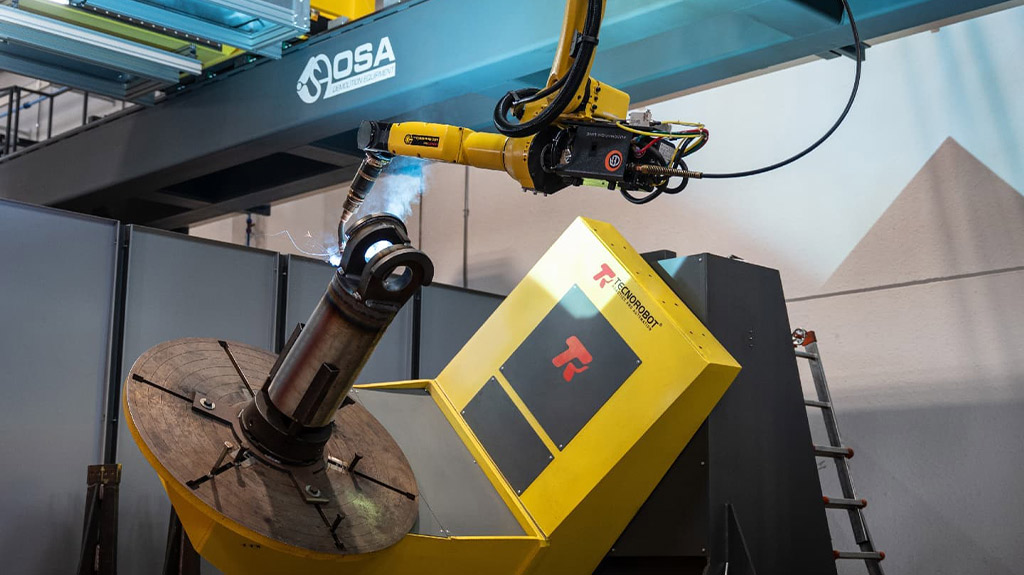
The customization of Tecnorobot’s robotic welding system for OSA: finished product quality and production cycle optimization.
In the current competitive landscape of the manufacturing industry, the quality of the finished product and the speed of production performance are crucial factors to ensure the maintenance of competitiveness.
Aware of this, O.S.A. srl, a company based in Molfetta (Bari) that has been producing demolition equipment since 1993, asked Tecnorobot to provide a robotic solution for welding and sheet metal cutting capable of improving the quality of their products and simplifying production processes, which had until then been entrusted to the experience and expertise of specialized operators. To meet these needs, Tecnorobot designed, developed, and built a highly customized robotic welding system.
This case study highlights how, through the proposed robotic solution, Tecnorobot earned the customer’s trust, establishing a close and solid collaborative relationship.
Matching the customer’s needs with the solution proposed by Tecnorobot
OSA chose a robotic welding system to improve the quality of the finished product and optimize costly manual processes. The speed of execution and the economic and competitive advantages arising from this choice were essential. Tecnorobot responded to these needs by providing a tailor-made solution, enabling OSA to achieve a more efficient and high-quality production process, fully meeting their expectations.
Before opting for a robotic welding system, OSA explored various possible options to enhance the quality level of their products and make production more efficient. One of the possibilities considered was recruiting specialized labor. However, the difficulty of finding personnel with such specialized profiles highlighted how robotic automation of the process was the best solution. This choice turned out to be the most effective and practical way to address the existing productivity and quality requirements.
During the supplier selection process, guarantees in terms of responsiveness, speed, and precision were the most significant criteria for the customer’s evaluation. These factors were deemed essential, especially when considering machine downtime for scheduled maintenance and potential technical issues. Tecnorobot demonstrated its strong capabilities and guarantees in these areas, convincing the customer of its reliability.
The implementation of Tecnorobot’s solution
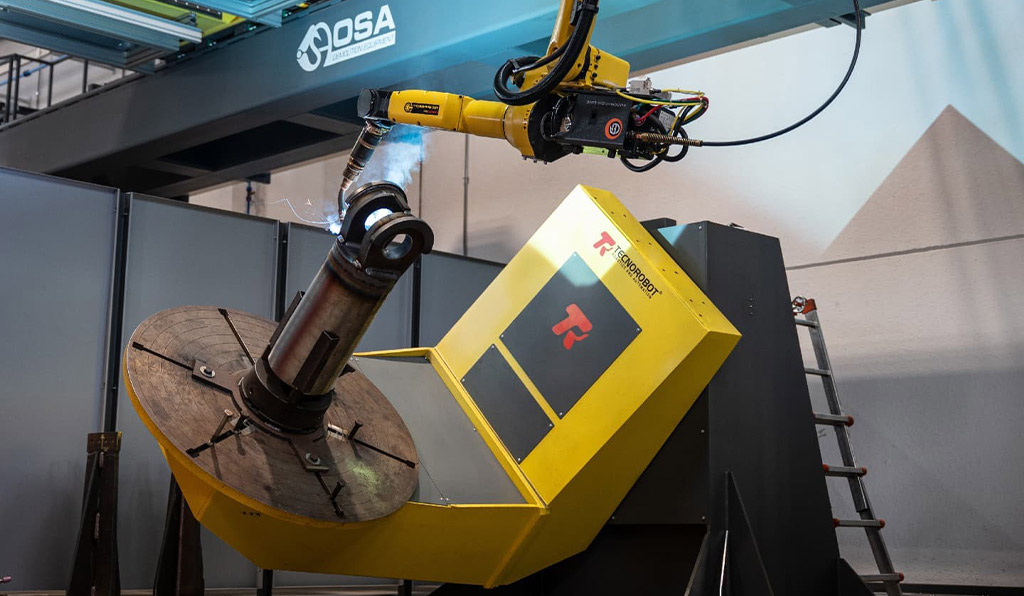
The integration of the robotic system into the existing production cycle was approached by Tecnorobot with the usual determination, professionalism, and proactivity that characterize the company. Although the team initially faced some challenges, these were overcome through continuous adjustments and daily optimizations of Tecnorobot’s Tailor Made production. This process demonstrated the team’s ability to adapt and effectively implement the proposed technologies, improving overall production efficiency and unlocking the full potential of the robotic automation system.
The support provided by Tecnorobot to the customer during the installation and startup phase was strategically very useful for the correct use of the system’s functionalities. The installation process was quick, and the subsequent support and training provided valuable insights, establishing a solid foundation for future complex solutions.
The training of the personnel was managed through Tecnorobot’s standard program, which proved adequate for the initial needs. However, additional training was necessary to address specific production issues and implement complex codes. The Tecnorobot team supported the customer and guided them through daily production challenges, working to fully integrate the system into existing production processes. This period of support demonstrates Tecnorobot’s ongoing commitment to improving its expertise and optimizing the customer’s operations.
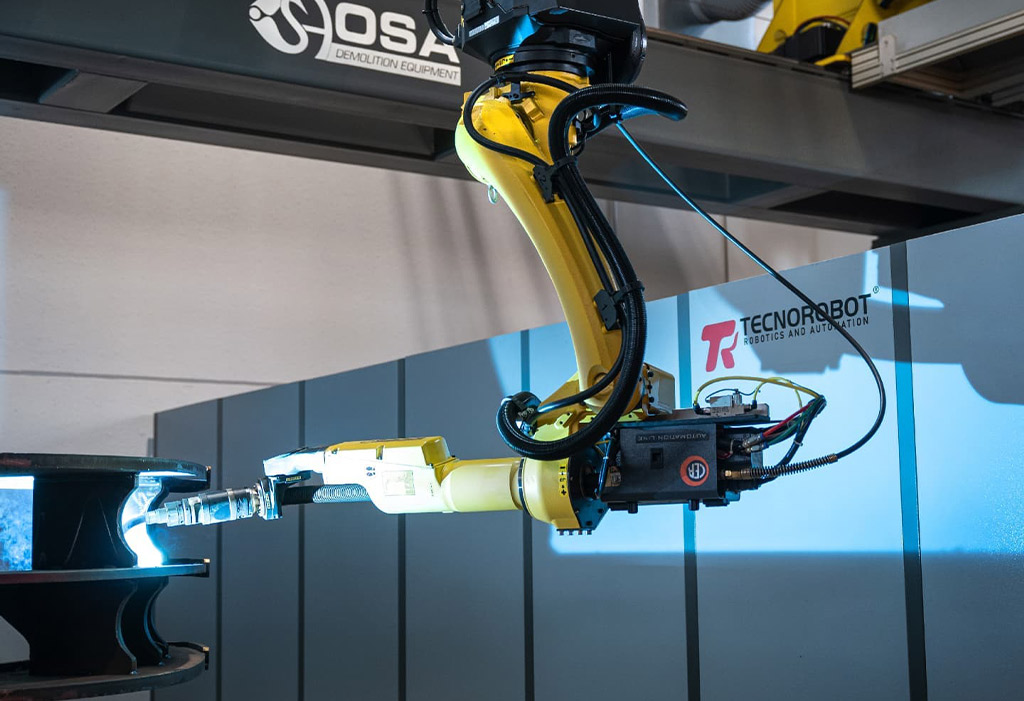
One of the most significant customizations designed and implemented by Tecnorobot at the customer’s request was the “upside-down” configuration of the system, with the robotic welding arms mounted on wings operating from above. Traditionally, welding arms are positioned on ground-mounted sleds. The decision to place them on wings operating from above proved particularly suitable for the types of operations the company frequently handles.
Results achieved by the customer, return on investment, and potential developments
The implementation of the robotic welding system resulted in a productivity increase of about 50%, directly attributable to the automation of the welding processes in the Tecnorobot system. The greater repeatability and standardization of product quality significantly reduced the risk of defects, ensuring consistently high-quality products. This standardization allowed for a continuous production flow, contributing to the increase in productivity. The decision to automate the production cycle proved highly effective in increasing OSA’s competitiveness in the increasingly globalized market in which it operates.
The main benefits observed by the customer following the installation of the system include:
- increased productivity
- improved finished product quality
- repeatability and standardization of the process, resulting in a 50% increase in production
- greater product reliability, especially for components subject to high pressures
- significant reduction in scrap
All these advantages contribute to an overall improvement in production.
Looking ahead, the customer’s primary goal is to automate the production of all the products in their commercial offering. In this regard, investment plans anticipate an increase in the number of robotic cells in production. Robotic automation will allow specialized personnel to focus on less demanding and labor-intensive stages of the process, adding more value.
Conclusion
This case study demonstrates how Tecnorobot, through its technology, know-how, and customer-oriented approach, is able to provide innovative and truly successful technological solutions for the customer, confirming the importance of a strategic and customized collaboration between supplier and customer.

About us
Since 1993, Tecnorobot has been a leader in industrial automation, specializing in the design and creation of tailor-made robotic solutions. With an unwavering commitment to innovation and quality, we help companies optimize their production processes, ensuring efficiency, accuracy, and safety.
Our team of experts works closely with clients to develop plants that perfectly meet their needs, transforming industrial challenges into growth opportunities.